


The arrival of a newborn brings plenty of firsts: the first cry, the first feeding, the first time tiny fingers wrap around yours. Amid the excitement, parents are also busy making sure their baby is healthy and comfortable.
But here's something many new parents may not know: a baby can look perfectly healthy at birth and still have an underlying medical condition.
Some genetic, metabolic and hormonal disorders do not cause obvious symptoms in the first few days of life. By the time signs become noticeable, the condition may already have begun affecting the baby's growth or development.
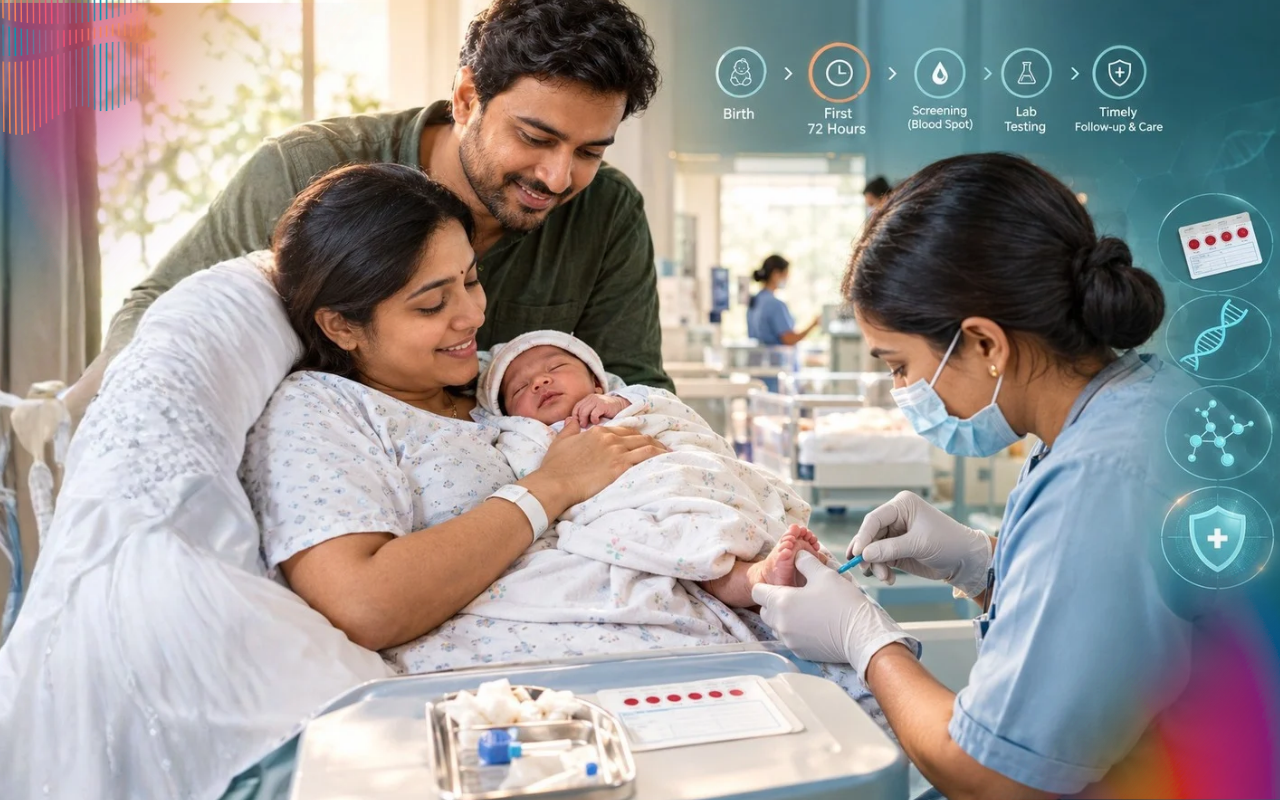
This is where newborn screening comes in. Conducted soon after birth, these tests can help identify certain conditions early, giving babies a better chance of receiving timely treatment and growing up healthier.
What is newborn screening?
Newborn screening is a set of tests designed to identify specific health conditions in babies before symptoms appear. These conditions may be rare, but some can lead to serious complications if they go undetected.
Depending on the screening programme, the tests may look for metabolic disorders, hormonal conditions, certain genetic diseases and other conditions that benefit from early intervention.
For example, screening may help detect congenital hypothyroidism, in which the thyroid gland does not produce enough hormones for normal growth and brain development. It may also identify certain inherited metabolic disorders that affect how the body processes nutrients.
Newborn screening is different from a routine physical examination. A baby may feed well, sleep normally and show no visible signs of illness, yet still need further testing.
The purpose is simple: find certain health problems early, when treatment may be most effective.
Why are the first 72 hours so important?
The first three days of life are a crucial period for newborn care. Screening is often planned around this window, although the ideal timing depends on the test, the baby's feeding and medical circumstances, and local guidelines.
Here's why early screening matters.
1. Some conditions are silent at first
Not every health problem announces itself with symptoms. Certain metabolic and hormonal disorders may remain hidden during the first few days, even as they begin to affect the body.
Screening can help identify these conditions before parents or doctors have a reason to suspect them.
2. Early treatment can prevent serious complications
For some conditions, treatment started early can make a substantial difference. For instance, babies with congenital hypothyroidism can receive thyroid hormone replacement, which helps support normal growth and brain development.
Similarly, dietary changes, specialised formulas or other treatments can help manage certain inherited metabolic disorders and reduce the risk of complications.
The earlier an actionable condition is identified, the sooner the appropriate care can begin.
3. It gives families a clearer path forward
An unexpected diagnosis can be overwhelming for any family. But finding a condition early can help parents and healthcare professionals plan treatment, arrange specialist care and understand what the child needs.
Early detection does not guarantee that every complication can be prevented. However, it can offer families valuable time to make informed decisions and begin care when it matters most.
What tests are included in newborn screening?
Newborn screening programmes vary by country, hospital and healthcare system. Common approaches include:
- Blood spot screening: A small blood sample, usually collected by pricking the baby's heel, is tested for selected metabolic, hormonal and genetic conditions.
- Hearing screening: Tests check whether a newborn may have hearing loss, allowing further assessment and early support if needed.
- Pulse oximetry: A sensor measures oxygen levels in the blood to help identify certain critical congenital heart defects that might otherwise go unnoticed.
Not every programme includes the same tests, and no screening panel detects every possible condition. In India, the tests offered can vary between hospitals and regions, so parents should ask their healthcare provider which conditions are covered.
Does a positive screening result mean something is wrong?
Not necessarily, and this is an important distinction for parents to understand.
A screening test identifies babies who may need further evaluation. It is not the same as a confirmed diagnosis. Some babies with an abnormal result will have a normal follow-up assessment, while others may need additional tests and treatment.
If a healthcare provider contacts you about a screening result, follow the recommended timeline for confirmatory testing. A prompt follow-up can be especially important for conditions where treatment should begin quickly.
Parents should also remember that a normal screening result does not rule out every health condition. If a baby develops concerning symptoms, medical advice is necessary even if screening results were normal.
What can parents do?
New parents already have plenty to think about, but a few simple questions can help ensure their baby's screening is not overlooked.
- Ask the hospital or paediatrician which newborn screening tests are available.
- Find out when the tests should be performed and when results are expected.
- Make sure you know how the hospital will communicate the results.
- Attend all recommended follow-up appointments, including repeat tests if needed.
- Keep a record of screening results and share it with your child's doctor.
If your baby was discharged before all recommended tests were completed, ask your healthcare provider how and when to arrange them.
A small test, a potentially life-changing step
The first 72 hours of a baby's life are filled with milestones, but they are also an opportunity to identify health concerns that may not be visible yet.
Newborn screening cannot prevent every illness or predict a child's entire health journey. What it can do is help detect selected conditions early, when timely treatment and intervention may significantly improve outcomes.
For parents, it is one more way to give their little one a healthier start in life. And for a child with a condition that might otherwise go unnoticed, those early hours can make a difference that lasts for years.



 admin@zyephr.com


