


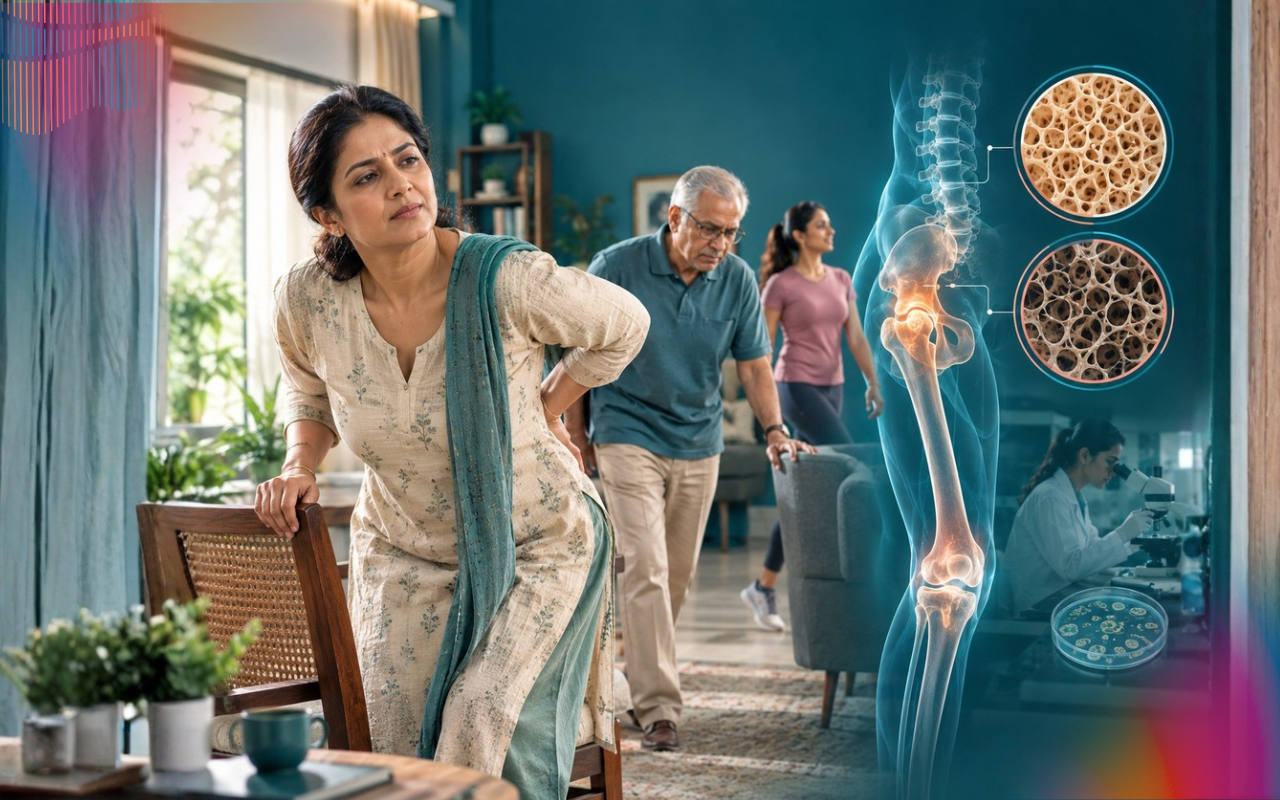

Bones may seem strong and unchanging, but they are living tissues that constantly break down and rebuild. As we age, this balance can shift, causing bones to lose density and become more fragile.
This is what happens in osteoporosis, a condition that makes bones weaker and more likely to break, sometimes even after a minor fall or everyday movement.
What makes osteoporosis particularly concerning is that it often develops silently. You may not experience pain or notice any changes until a fracture occurs.
Who is at risk?
Although osteoporosis is more common in older adults, it can affect younger people too. Your risk may be higher if you:
- Are over 50, particularly if you are a woman who has gone through menopause.
- Have a family history of osteoporosis or hip fractures.
- Get insufficient calcium or vitamin D.
- Lead a sedentary lifestyle or have prolonged periods of inactivity.
- Smoke or consume excessive alcohol.
- Have certain medical conditions or take medicines such as long-term corticosteroids.
Having one or more risk factors does not mean you will definitely develop osteoporosis, but it is worth discussing your bone health with a healthcare professional.
Can you spot the warning signs?
Osteoporosis usually has no obvious early symptoms. However, unexplained fractures, a gradual loss of height or a stooped posture may indicate weakening bones or spinal fractures.
A bone density test, commonly called a DEXA or DXA scan, can help assess bone strength and identify osteoporosis. Your doctor can recommend screening based on your age, medical history and individual risk factors.
How can you protect your bones?
The good news is that everyday habits can support bone health.
- Get enough calcium and vitamin D: Include foods such as milk, curd, calcium-set tofu and suitable leafy greens. Ask your doctor whether you need vitamin D testing or supplements.
- Stay physically active: Walking, strength training and appropriate weight-bearing exercises help maintain bone strength.
- Avoid smoking and limit alcohol: Both can negatively affect bone health.
- Prevent falls: Keep your home well-lit, remove tripping hazards and work on balance and muscle strength.
- Don't ignore risk factors: Discuss early screening with your doctor, especially after menopause or if you have a history of fractures.
Osteoporosis may remain unnoticed for years, but its impact can be significant. Knowing your risk, maintaining healthy habits and getting screened when appropriate can help protect your bones and reduce the risk of fractures.


 admin@zyephr.com


