

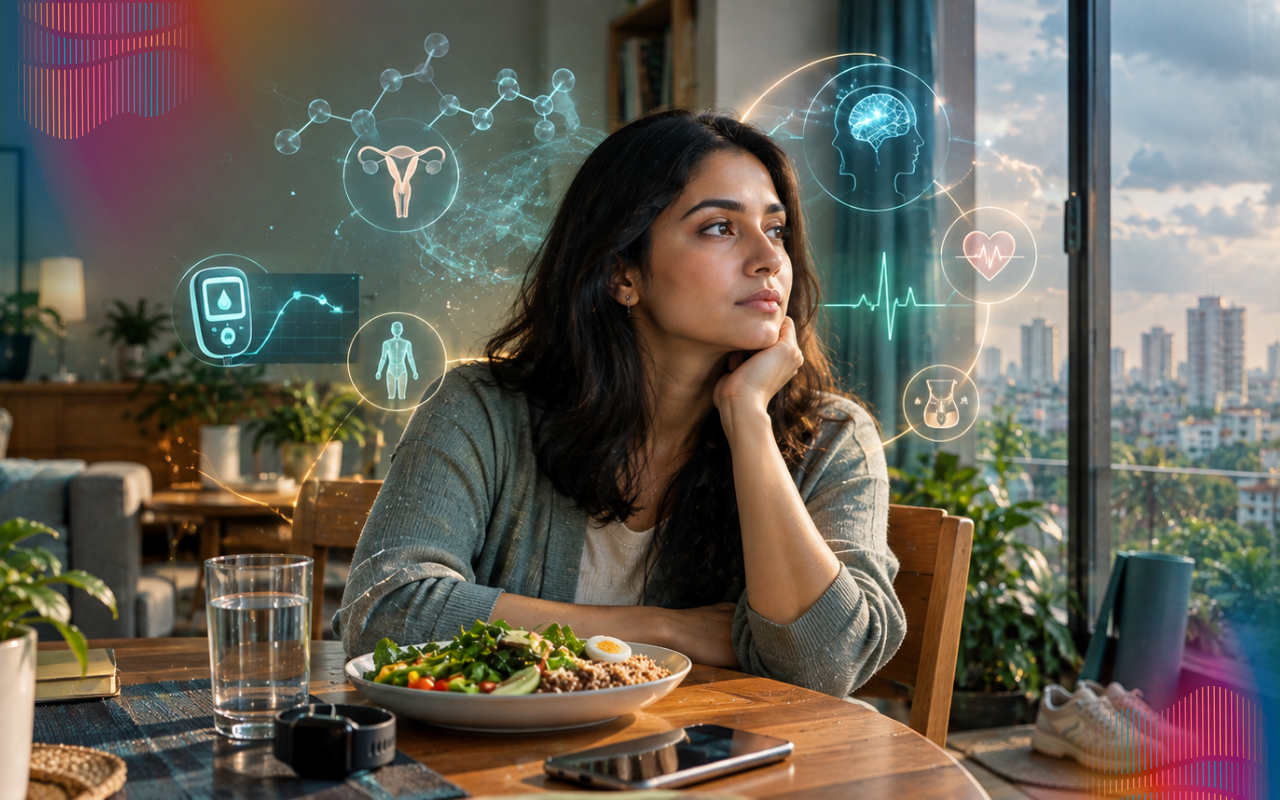
Feeling tired after a long day is normal. Feeling exhausted after doing almost nothing? Getting breathless while climbing stairs you used to manage easily? Finding yourself reaching for another cup of tea or coffee just to get through the afternoon?
These symptoms are easy to blame on a busy schedule, poor sleep or stress. But for many women, there may be another explanation: iron deficiency.
Iron is essential for making haemoglobin, the protein in red blood cells that carries oxygen around the body. When iron stores fall too low, the body may eventually struggle to make enough haemoglobin, resulting in iron-deficiency anaemia.
And in India, this is far from a rare problem. According to India’s NFHS-5 data, 57.2% of non-pregnant women aged 15–49 and 52.2% of pregnant women in this age group were anaemic.
But there is an important distinction: anaemia does not automatically mean iron deficiency. Anaemia can also result from deficiencies of vitamin B12 or folate, infections, chronic diseases, blood loss and inherited conditions such as thalassaemia. Iron status therefore needs to be assessed rather than assumed.
Why are Indian women particularly vulnerable?
Women can lose iron through menstrual bleeding every month. Those with heavy or prolonged periods can be at even greater risk.
Pregnancy increases iron requirements further because the body needs to support both the mother and the developing baby. Frequent pregnancies, inadequate dietary intake, poor absorption and certain gastrointestinal conditions can also contribute.
Diet matters, too. While Indian diets can provide plenty of iron through foods such as lentils, beans, green leafy vegetables, whole grains, nuts, seeds, meat and eggs, the amount of iron consumed is not the only factor. How much iron the body actually absorbs also matters.
For example, iron from plant foods is generally less readily absorbed than haem iron from animal foods. Vitamin C can improve the absorption of non-haem iron, while certain dietary components can reduce it.
7 signs of iron deficiency you shouldn't brush off
Iron deficiency does not always announce itself dramatically. In fact, some symptoms can appear gradually and may be mistaken for everyday fatigue.
1. You are tired all the time
This is perhaps the most commonly overlooked sign.
If your energy seems persistently low despite getting enough sleep, iron deficiency could be one possibility. As iron deficiency progresses to anaemia, reduced haemoglobin means less oxygen can be transported to tissues, contributing to fatigue and weakness.
2. You get breathless easily
Do you find yourself unusually out of breath after climbing a few stairs or walking at a normal pace?
Shortness of breath, particularly during physical activity, can occur with anaemia because the body's oxygen-carrying capacity is reduced.
3. You feel dizzy or light-headed
Frequent dizziness, feeling faint when standing up or unexplained headaches shouldn't simply be written off as “weakness.”
These are recognised symptoms associated with anaemia and can become more noticeable as the condition becomes more severe.
4. Your heart seems to race
A racing or pounding heartbeat, particularly alongside fatigue or breathlessness, can occur when the body tries to compensate for reduced oxygen delivery.
Persistent palpitations deserve medical attention rather than being automatically attributed to stress or anxiety.
5. You look unusually pale
Pale skin isn't a reliable way to diagnose iron deficiency on its own, but noticeable pallor—particularly of the inside of the eyelids, gums or nail beds—can occur with anaemia.
6. Your hair and nails are changing
Hair loss or brittle nails can occur with iron deficiency, although these symptoms have many other possible causes. That is precisely why they should not be treated as proof of an iron deficiency without testing.
7. You develop unusual cravings
Some people with iron deficiency develop pica, an unusual craving to eat substances that have little or no nutritional value, such as ice, मिट्टी or chalk.
A persistent craving for ice, in particular, can sometimes be associated with iron deficiency and is worth mentioning to a doctor.
Don't ignore your periods
For many women, menstrual blood loss is an important part of the iron-deficiency puzzle.
If your periods are unusually heavy, last longer than usual, involve passing large clots or leave you exhausted every month, don't simply accept it as something you have to live with.
Heavy menstrual bleeding can contribute to iron deficiency, but it can also have an underlying cause that needs to be investigated. Treating the iron deficiency without addressing ongoing blood loss may only solve part of the problem.
How do you know if you're actually iron deficient?
Symptoms alone aren't enough.
A complete blood count (CBC) can assess haemoglobin and other red-cell measurements. Tests such as serum ferritin can help assess the body's iron stores. WHO specifically recommends ferritin as an important marker for assessing iron status, while also noting that inflammation and infection can affect ferritin interpretation.
This distinction matters because someone can have depleted iron stores before developing obvious anaemia.
So if you have persistent symptoms, heavy periods, are pregnant or have another reason to suspect iron deficiency, speak to a healthcare professional about whether testing is appropriate.
Can food fix iron deficiency?
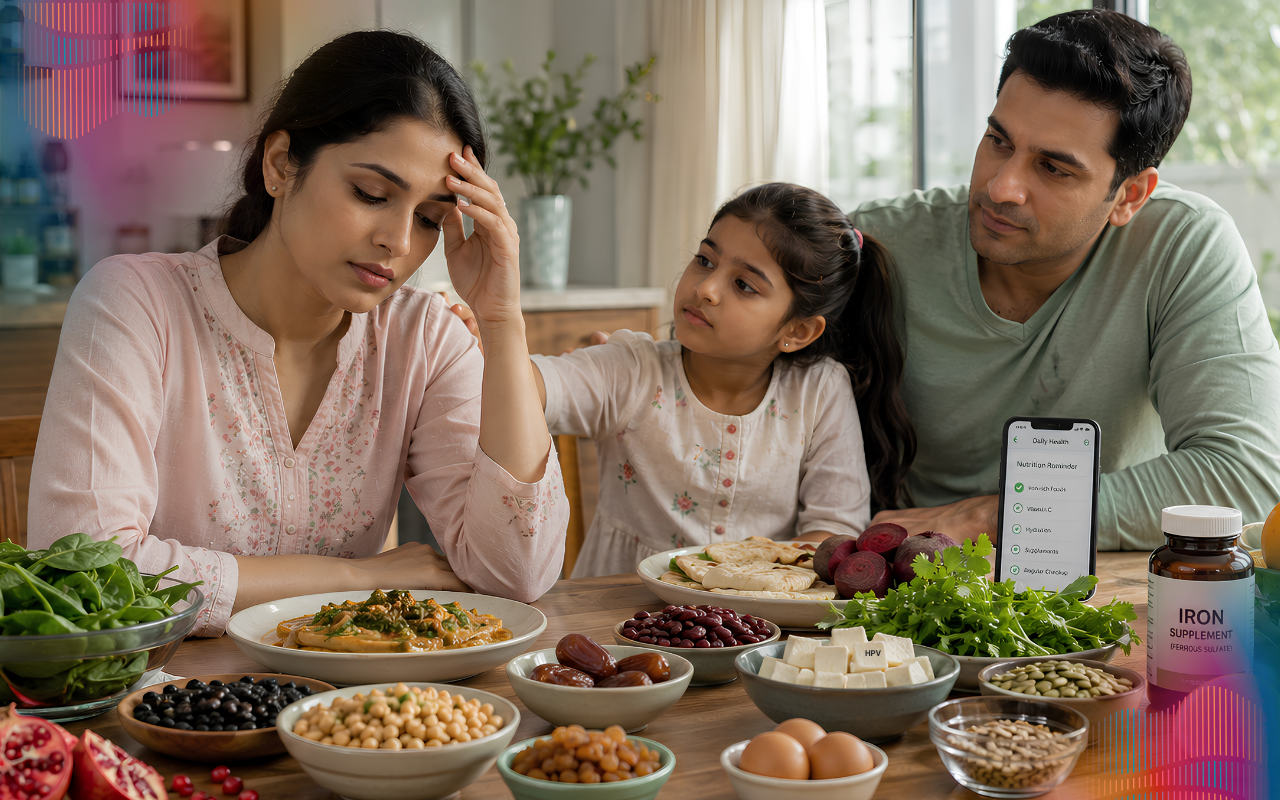
A balanced diet is an important part of prevention and recovery, but significant iron deficiency may require iron supplementation prescribed or recommended by a healthcare professional.
Good dietary sources include:
- Lentils, dals and beans
- Soybeans and soy products
- Green leafy vegetables
- Nuts and seeds
- Whole grains and millets
- Eggs
- Meat and fish, for those who eat them
Iron-fortified foods
Pairing plant-based sources of iron with vitamin-C-rich foods such as amla, guava, oranges, tomatoes, lemon or capsicum can help improve absorption.
And one small habit is worth remembering: tea and coffee contain compounds that can reduce the absorption of non-haem iron when consumed around meals. If you're trying to improve iron intake, avoid having them right alongside your main iron-rich meal.
Don't self-medicate with iron
Iron supplements are widely available, but that doesn't mean everyone with fatigue should start taking them.
Too much iron can be harmful, and anaemia has several possible causes. If your haemoglobin is low, the next question should be why.
For example, a woman with anaemia caused by vitamin B12 deficiency, chronic disease or an inherited blood disorder may need a very different approach from someone with iron-deficiency anaemia.
Hence,
Iron deficiency isn't simply about feeling “a little weak.” Left untreated, significant iron deficiency and anaemia can affect energy, physical capacity and quality of life, and anaemia during pregnancy can have important consequences for both mother and baby.
So if tiredness has become your normal, your periods are unusually heavy, you are frequently dizzy or breathless, or you simply don't feel like yourself anymore, don't just push through it.
Sometimes, the answer isn't another cup of tea, an earlier bedtime or telling yourself to slow down.
Sometimes, it's a blood test.



 admin@zyephr.com


