


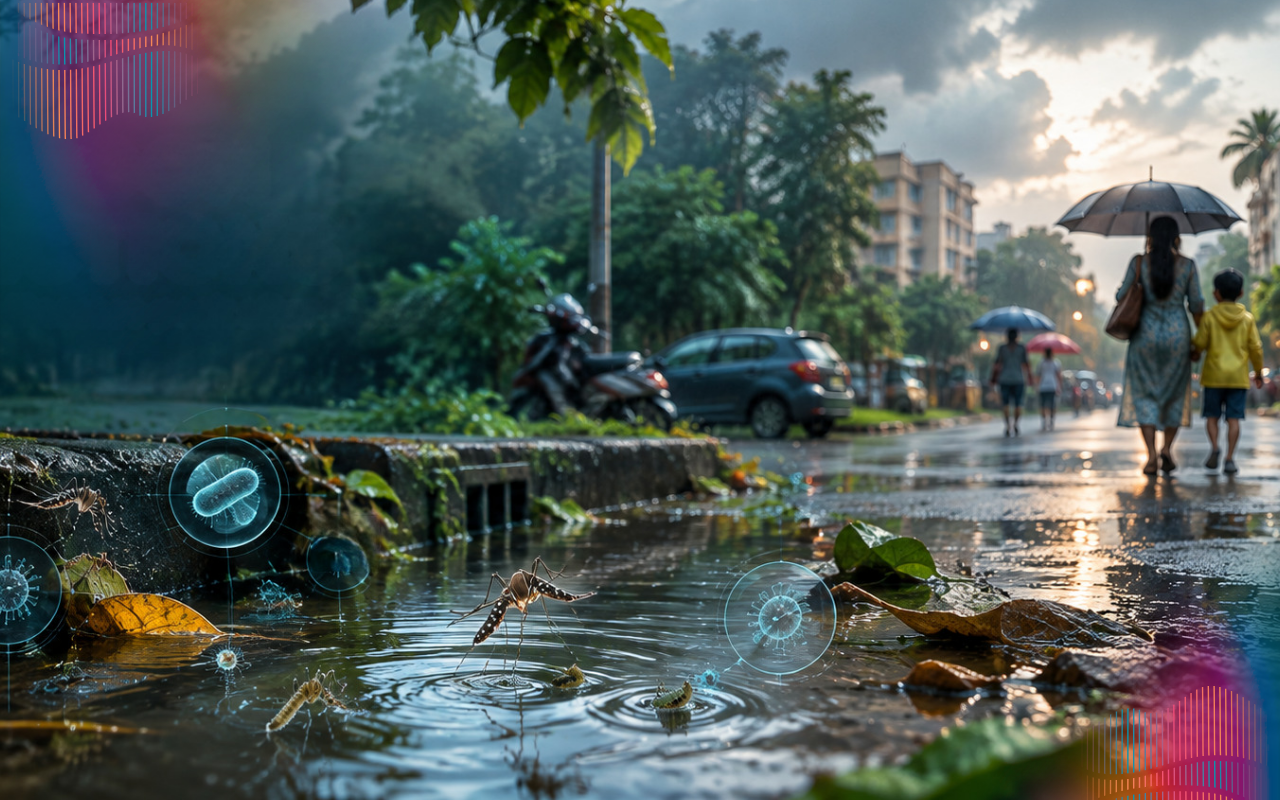

The monsoon brings much-needed relief from the heat, but it also creates conditions that can increase the spread of several infections. Dengue, malaria, leptospirosis and water-borne illnesses often become more common during or after the rainy season.
But why do some infections peak after the rain has stopped?
The answer lies in what rainfall does to our surroundings. Rain can leave behind stagnant water, disrupt sanitation systems, contaminate water sources and create damp environments where disease-causing organisms and vectors can thrive. Since most infections also have an incubation period, there can be a delay between the environmental trigger, exposure and the appearance of symptoms.
Why does the risk increase after rainfall?
Rainfall can create mosquito breeding sites in flowerpots, discarded containers, tyres, coolers, construction sites and clogged drains. Warm and humid conditions can further support mosquito survival and reproduction.
At the same time, heavy rain and flooding can overwhelm drainage and sewage systems, increasing the possibility of contaminated water entering drinking-water sources. Wet soil and floodwater can also become contaminated with animal urine and other pathogens.
This creates a chain:
Rainfall → stagnant water or contamination → increased exposure → incubation period → illness
So, even when the skies clear, the health risks created by earlier rainfall may continue.
Dengue, malaria: Mosquito danger
Dengue is transmitted by infected Aedes mosquitoes, which commonly breed in small collections of stagnant water. Rain can create numerous breeding sites around homes and neighbourhoods. WHO notes that dengue transmission often peaks during and after rainy seasons.
Malaria, meanwhile, is caused by Plasmodium parasites and transmitted by infected female Anopheles mosquitoes. Rainfall can create suitable breeding habitats for these mosquitoes, while temperature and humidity influence mosquito and parasite development.
Both illnesses can cause fever, but their symptoms can overlap with other infections. Testing and medical evaluation are therefore important rather than assuming every post-monsoon fever is “viral.”
Leptospirosis: the floodwater risk
Leptospirosis is a bacterial infection associated with water or soil contaminated by the urine of infected animals, particularly rodents. Heavy rainfall and flooding can spread this contamination and increase human exposure.
People who walk through floodwater, clean flooded areas or have cuts and wounds exposed to contaminated water may be at greater risk.
Fever, headache, chills and muscle pain can occur, while severe infections may affect organs such as the kidneys and liver.
Water-borne infections
Heavy rain can also increase the risk of diarrhoeal diseases when sewage or contaminated surface water enters water supplies. These infections can cause diarrhoea, vomiting, abdominal cramps and dehydration.
Typhoid is another concern where sanitation and drinking-water systems are compromised. It spreads mainly through food or water contaminated with Salmonella Typhi.
How to stay protected after the rain
A few simple measures can reduce exposure:
- Eliminate stagnant water: Empty and clean coolers, flowerpot trays, buckets and other water-holding containers regularly.
- Prevent mosquito bites: Use repellent and wear clothing that covers your arms and legs where practical.
- Drink safe water: Use properly treated or boiled water when water safety is uncertain.
- Be careful with food: Wash produce, maintain hand hygiene and avoid food from places with questionable sanitation.
- Avoid floodwater: Especially if you have cuts or wounds; cover wounds properly when exposure cannot be avoided.
- Take persistent fever seriously: Fever after mosquito or floodwater exposure may require testing and medical evaluation.
What to Remember
Monsoon infections are not caused simply by getting wet in the rain. They are driven by the environmental changes that rainfall creates—and those changes can persist well after the clouds disappear.
The post-monsoon period is therefore an important time to remain cautious: remove stagnant water, prevent mosquito bites, use safe water and food, avoid contaminated floodwater and don't dismiss persistent fever as “just monsoon fever.”



 admin@zyephr.com


