


Remember when getting a fitness tracker meant one thing—hitting 10,000 steps a day? For years, our health goals were purely external: how far we ran, how many calories we burned, or how sweaty we got at the gym.
In movie terms, fitness tracking was like focusing entirely on a superhero’s flashy suit (think Iron Man’s armor) while completely ignoring what was happening under the hood—Tony Stark’s heart rate, energy reserves, and stress levels.
Today, a quiet shift is happening. We are moving from the era of Fitness Tracking (what your body does) to Health Tracking (how your body is). And understanding this difference might just be the most important upgrade you make for your long-term well-being.
Fitness vs. Health: What’s the Difference?
To understand why health tracking is taking center stage, think of your body as a car:
Fitness Tracking is like measuring your speedometer and odometer. It tells you how fast you’re moving and how much ground you’ve covered.
Health Tracking is like your car’s dashboard diagnostics. It tells you your engine oil level, tire pressure, and battery health.
You can drive 100 miles a day (great fitness!), but if your engine oil is bone dry, the car will eventually break down.
In real life, a person might easily hit 10,000 steps a day, but if they are sleeping only four hours, running on chronic stress, and experiencing silent blood pressure spikes, their overall health is actually compromised. Fitness is about performance; health is about baseline survival and balance.
3 Reasons Health Tracking Is Your New Superpower
1. It Uncovers "Silent" Health Indicators
Many of the most significant health issues don't scream for attention; they whisper. Conditions like high blood pressure, fluctuating blood sugar, or thyroid imbalances build up quietly over months or years without obvious pain.
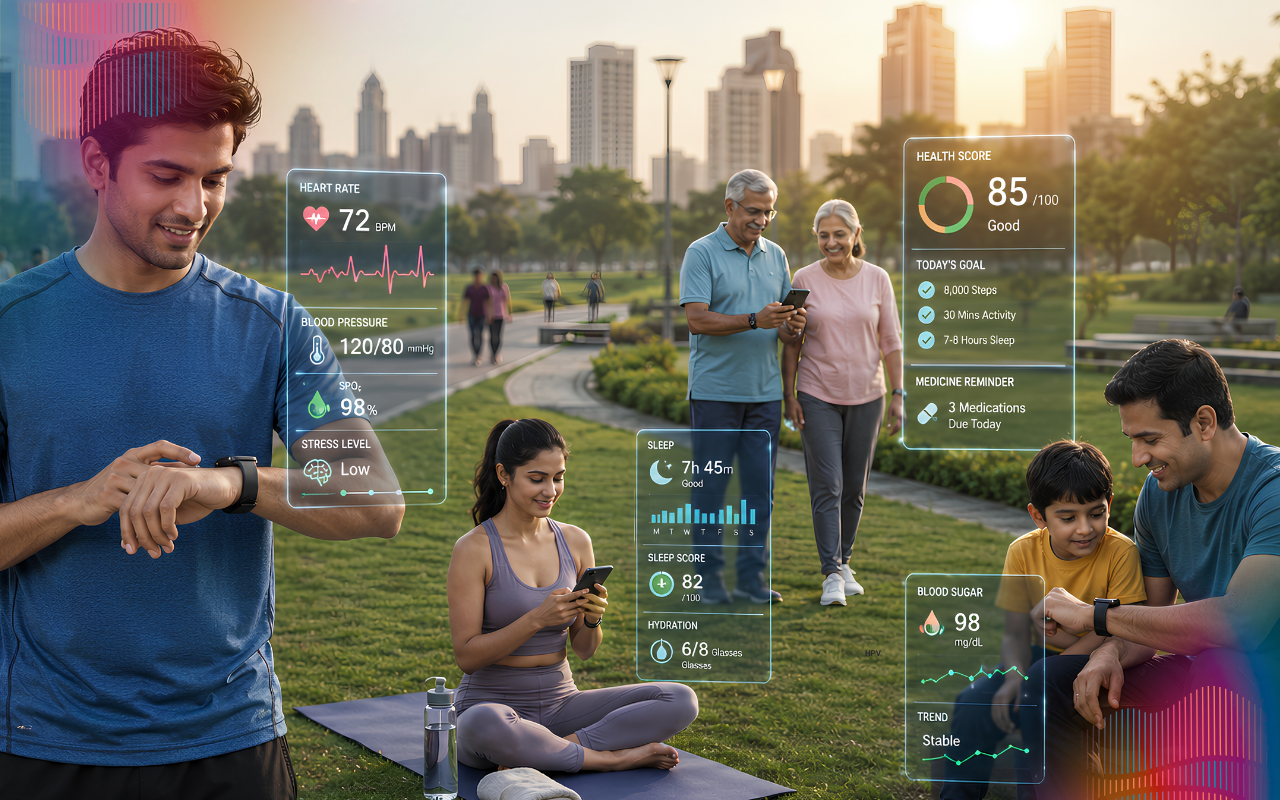
By tracking internal health metrics regularly—such as Resting Heart Rate (RHR), Heart Rate Variability (HRV), and Blood Glucose—you catch subtle shifts before they become major health scares.
2. The Power of "Personal Diagnostics"
Have you ever woken up feeling completely exhausted even though you were in bed for eight hours?
Fitness trackers used to just say, "You slept for 8 hours!" Modern health tracking tools go deeper: they analyze your sleep architecture—how much time you spent in Deep Sleep versus REM Sleep, and how your heart rate recovered overnight. Suddenly, you realize that late-night heavy meal or late cup of coffee ruined your sleep quality, giving you actionable insights to fix it the next day.
3. Preventing Burnout Before It Hits
In today’s fast-paced world, stress is the ultimate silent thief. When your body is under chronic stress, your nervous system remains stuck in "fight-or-flight" mode.
Health tracking metrics like HRV (Heart Rate Variability) act as an emotional fuel gauge. A low HRV score alerts you that your nervous system is overworked before you experience a mental breakdown or catch a seasonal flu bug. It tells you: "Today is a day for a gentle walk and early sleep, not an intense gym workout."
What Modern Health Tracking Looks Like
Here is how real people are using health tracking to transform their everyday lives:
The Coffee Cut-off: Tracking resting heart rate helps people realize that an espresso at 5:00 PM keeps their heart pumping fast until midnight, even if they fall asleep easily.
Catching Illness Early: Many smartwatch users notice a sudden, unexplained spike in their resting heart rate or skin temperature 24 to 48 hours before feeling a fever—giving them a head start to rest and isolate.
Understanding Food Responses: Continuous Glucose Monitors (CGMs), once used exclusively for diabetes management, are now used by everyday people to discover how specific foods (like a bowl of white rice vs. oats) affect their energy levels throughout the afternoon.
How to Start Health Tracking Without Feeling Overwhelmed
You don't need a medical degree or five different gadgets to start tracking your health. Here is a simple, stress-free way to begin:
- Pick One Key Metric: Start with Sleep Quality or Resting Heart Rate. Watch how it changes based on your stress, food, and exercise.
- Focus on Trends, Not Daily Panic: Don't freak out over one bad night's sleep or a single stress spike. Look at the weekly and monthly averages—that is where the real story lies.
- Log What Devices Can't See: Apps and wearables are great, but logging subjective feelings—like your daily mood, energy levels, or menstrual cycle symptoms—fills in the missing pieces of the puzzle.
What does this mean?
Fitness tracking taught us to move; health tracking teaches us to listen.
At the end of the day, running a marathon or crushing a workout feels great, but having stable energy, a calm mind, deep sleep, and healthy internal vitals feels even better. By shifting your focus from just counting steps to tuning into your body's internal signals, you take full control of your long-term health story.
If you fail to remember your health records, blood pressure readings, or vital trends, why not log them into Zyephr’s health module? Not tried it yet? Download the Zyephr app now!



 admin@zyephr.com


