


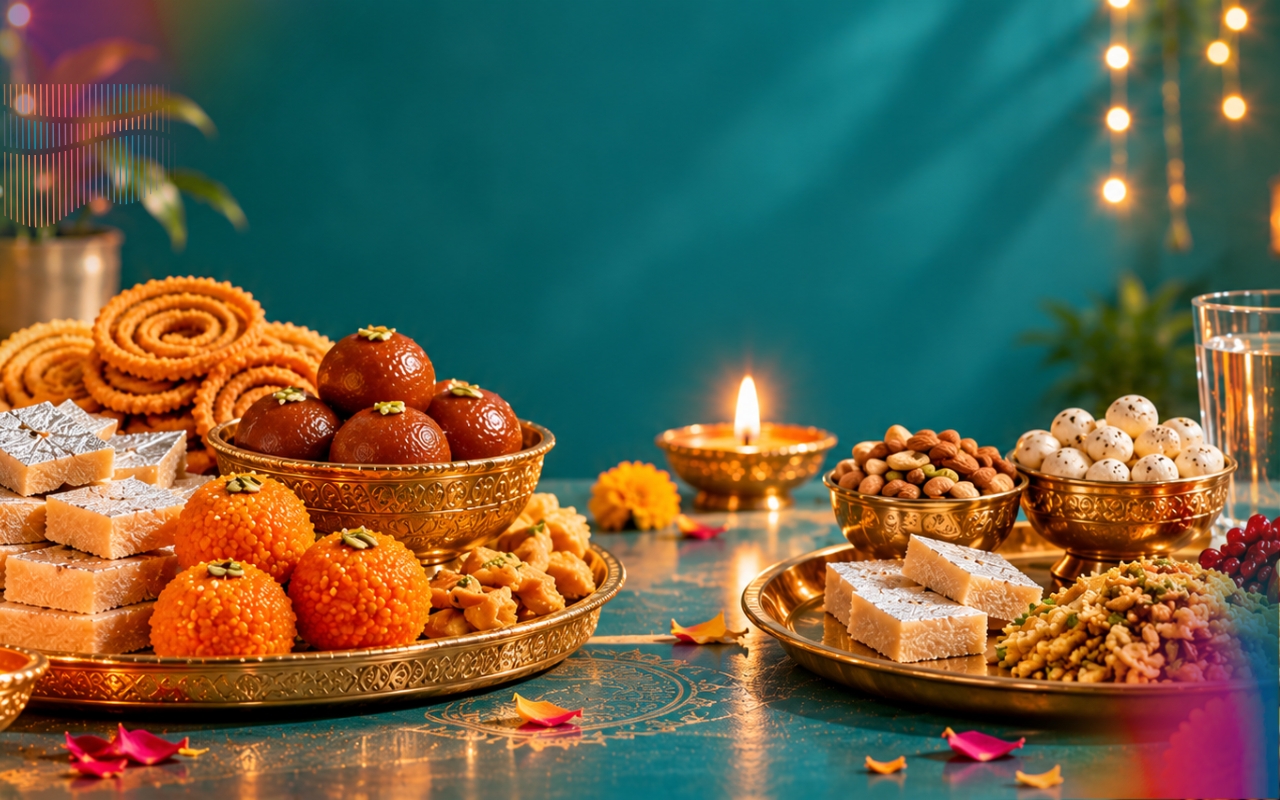

There is something about Diwali that makes food taste a little more special. Maybe it's the aroma of freshly fried namak pare, the sight of kaju katli neatly arranged in a silver tray, or that one relative who insists you cannot leave without eating just one more gulab jamun.
And honestly, who wants to?
Diwali is as much about food as it is about lights, laughter, family gatherings and traditions. From homemade delicacies to boxes of mithai exchanged between friends, the festive spread is an experience in itself. But somewhere between the endless snacks, late-night dinners and back-to-back celebrations, eating can become less about enjoyment and more about feeling uncomfortably full.
So, does celebrating Diwali mean putting healthy eating on hold? Not necessarily. The idea isn't to turn a festival into a food restriction exercise. It's about finding a comfortable middle ground where you can enjoy your favourites without losing sight of your everyday health.
The Dilemma: Eat Everything or Nothing?
Real-life festive eating doesn't have to swing between two extremes: eating everything in sight or avoiding sweets altogether.
The Indian Council of Medical Research–National Institute of Nutrition's Dietary Guidelines for Indians 2024 emphasise dietary variety, balance and moderation. These principles don't disappear during festivals; they simply become a little more flexible in practice.
The good news? You don't have to give up your favourite ladoo to make a sensible food choice.
1. Don't Arrive at the Party Starving
Here's a surprisingly common festive habit: skipping breakfast or lunch because there's a big dinner planned.
It sounds logical. Eat less during the day, save room for the evening.
Except that arriving at a party extremely hungry can make it harder to slow down, assess what you're eating and recognise when you've had enough.
Instead, stick to your usual meals. A breakfast of poha, vegetable upma or besan chilla, followed by a regular lunch, can help you approach the evening without feeling ravenous.
2. Make Your Plate a Celebration, Not a Competition
Picture a typical Diwali dinner. There are samosas, paneer tikka, chole, pulao, puris, raita, salads and at least four varieties of sweets.
The temptation is to sample everything immediately.
A simpler approach? Take a moment to look at the entire spread before filling your plate. Choose the dishes you genuinely love, include some vegetables, dal, curd or another protein-rich option, and serve yourself portions that feel comfortable.
You can always go back for more if you're still hungry.
3. Mithai Is Not the Enemy
Let's settle this: enjoying a kaju katli, peda or gulab jamun during Diwali isn't a nutritional failure.
What matters more is your overall eating pattern, not one festive afternoon.
If you're preparing sweets at home, you could experiment with smaller portions, reducing added sugar where appropriate, or incorporating ingredients such as nuts and seeds. For savoury snacks, baking or air-frying instead of deep-frying can be an alternative.
But healthier preparation doesn't automatically make a food unlimited. And traditional recipes don't need to be reinvented every time.
4. The Forgotten Festive Habit: Drinking Enough Water
Between shopping, decorating, visiting relatives and preparing elaborate meals, hydration can easily take a backseat.
And then there are the drinks. Sweetened sherbets, packaged juices, sugary mocktails and fizzy beverages often accompany festive meals, adding more sugar than we realise.
Keep water accessible throughout the day. If you're hosting, consider refreshing alternatives such as mint-and-lemon water, unsweetened chaas or lightly sweetened homemade drinks.
A festive beverage can still be colourful, delicious and refreshing without being excessively sweet.
5. A Little Movement Goes a Long Way
Here's an idea: instead of immediately settling onto the sofa after dinner, take a leisurely walk with your family.
No gym session. No calorie-burning challenge. Just a little movement.
Research suggests that walking shortly after meals can help reduce post-meal blood glucose rises. Even a short stroll may be useful, particularly for people managing diabetes or prediabetes.
And if walking isn't your thing, dancing to your favourite Bollywood tracks, helping clean up after dinner or simply moving around the house can make festive evenings more active.
6. What If You Have Diabetes or Prediabetes?
For people living with diabetes, festive eating deserves a little additional planning.
That doesn't mean Diwali has to become a week of deprivation. It means being mindful of carbohydrate portions, maintaining prescribed medication schedules, monitoring glucose as advised and avoiding skipped meals or unplanned fasting.
Importantly, don't change insulin or other medicines just because you're eating differently during the festival. If your meal timings or activity levels change significantly, consult your healthcare professional about managing them safely.
The RSSDI's festive diabetes guidance emphasises enjoying celebrations while making thoughtful food choices and maintaining appropriate glucose management.
The Morning After: No Guilt, No Punishment
Perhaps you ate an extra serving of chaat. Perhaps you enjoyed three sweets instead of one. Perhaps dinner was much later than usual.
It happens.
The morning after a festive feast doesn't need a detox drink, a juice cleanse or an exhausting workout to compensate.
Return to your regular meals. Drink water. Include vegetables, fruit, whole grains and protein in your meals. Get some movement and adequate sleep.
One indulgent evening doesn't define your health. Your everyday habits matter much more than a single meal.
This Diwali, Celebrate the Food and the Feeling
Think of The Great Indian Kitchen, which offers a powerful reminder of how deeply food, family and everyday life are connected. While the film explores the unequal labour behind household cooking, it also illustrates something familiar: food is rarely just food. It carries memories, relationships, traditions and expectations.
And that's precisely why festive eating shouldn't become a source of unnecessary anxiety.
You can enjoy your grandmother's homemade sweets, share a plate of chaat with friends, savour a festive dinner and still make thoughtful choices along the way.
This Diwali, let balance be your celebration, not your restriction.
And if you're looking to make everyday health habits easier to track, download the Zyephr app and explore its health and wellness features. From keeping an eye on your daily habits to accessing useful health information, Zyephr can be a handy companion as you navigate festive celebrations and return to your regular routine.
Because a healthier lifestyle isn't built in one perfect day. It's built through the little choices we make, festival after festival.



 admin@zyephr.com


