


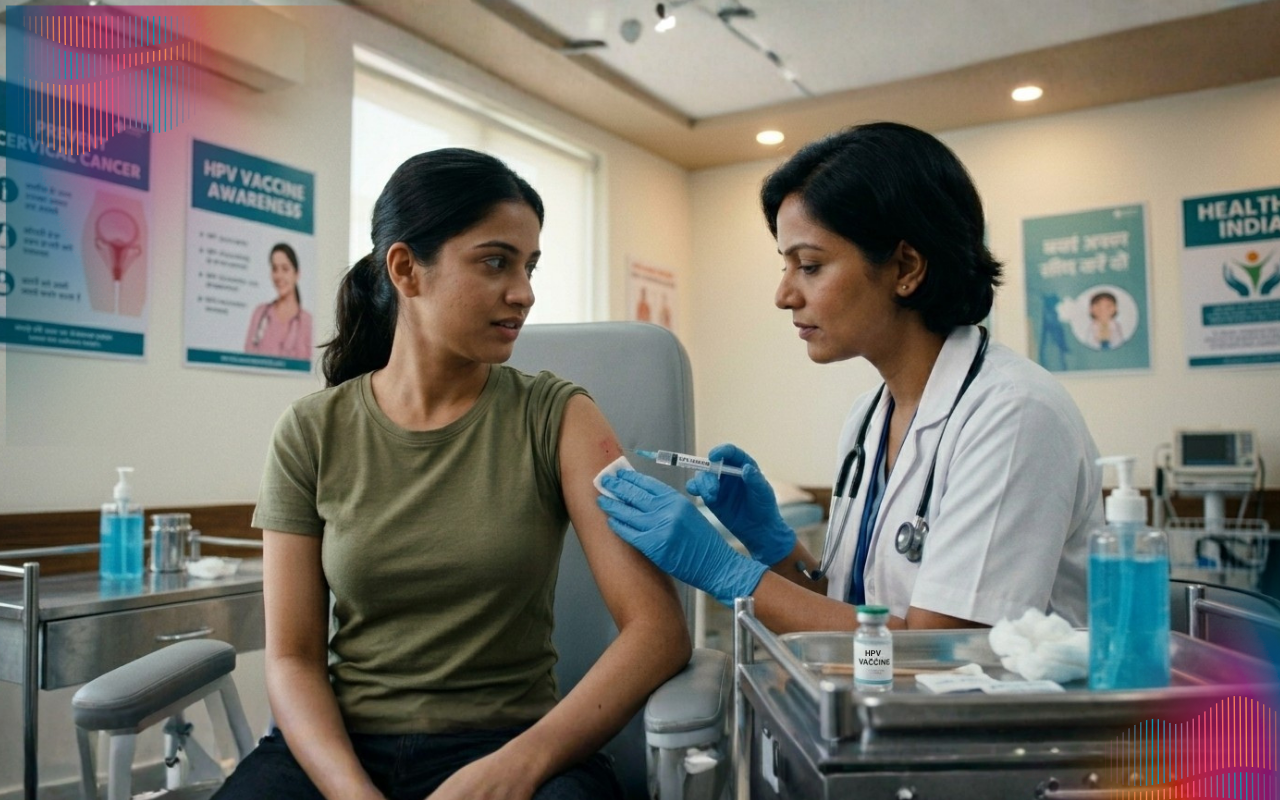

When people hear the word cancer, prevention is rarely the first thing that comes to mind. But cervical cancer is one of the few cancers where prevention is actually possible—and the solution is surprisingly simple: the HPV vaccine.
Cervical cancer continues to affect thousands of women every year, especially in countries like India. The encouraging news is that health experts now know exactly what causes most cases of cervical cancer—and how to stop it early.
Even better, the Indian government has started rolling out free HPV vaccination programmes in public health systems, aiming to protect young girls before the virus ever becomes a threat.
So what exactly is HPV, and why is this vaccine getting so much attention?
What Is HPV and Why Does It Matter?
HPV stands for human papillomavirus, a very common virus that spreads through skin-to-skin intimate contact. Most people will encounter HPV at some point in their lives—often without even knowing it.
In many cases, the body clears the virus naturally. But certain high-risk strains of HPV can stay in the body for years and slowly cause abnormal changes in cervical cells.
If these changes go unnoticed and untreated, they can eventually develop into cervical cancer.
This is why HPV is responsible for the vast majority of cervical cancer cases worldwide. Understanding this link has helped doctors focus on prevention rather than just treatment.
How HPV Vaccine Prevents Cervical Cancer
The HPV vaccine works like a training program for your immune system.
It teaches the body to recognise and fight the most dangerous HPV strains before they can cause infection. In simple terms, the vaccine blocks the virus before it gets the chance to damage cervical cells.
Countries that introduced widespread HPV vaccination years ago are already seeing impressive results. Studies show significant drops in HPV infections, cervical abnormalities, and pre-cancerous lesions among vaccinated populations.
This is why global health experts consider the HPV vaccine one of the most powerful cancer prevention tools available today.
Free HPV Vaccine in India?
Recognising the importance of early prevention, the Indian government has begun providing HPV vaccines for free in public health programmes, especially targeting girls between 9 and 14 years of age.
This age group is important because the vaccine works best before exposure to the virus.
School vaccination drives, government hospitals, and public health centres are gradually expanding access to the vaccine so that more families can benefit from this protection.
Health experts believe that if vaccination coverage continues to increase, India could see a dramatic drop in cervical cancer cases in the coming decades.
Vaccination Is Powerful- But Screening Still Matters
While the HPV vaccine protects against the most dangerous strains of the virus, it does not cover every possible cause of cervical cancer.
That’s why regular cervical cancer screening, such as Pap smears or HPV tests, remains important for adult women.
These tests detect abnormal cell changes early, often long before they turn into cancer. When vaccination and screening are combined, the chances of preventing cervical cancer become much higher.
For years, cervical cancer has been a major health concern for women. But today, we have something powerful on our side: prevention.
The HPV vaccine, along with regular screening and awareness, offers a clear path toward reducing cervical cancer risk.
And with government initiatives now making the HPV vaccine available for free, more families have the opportunity to take this simple but life-saving step.
Sometimes the most powerful medical breakthroughs aren’t complicated treatments—they’re timely prevention.



 admin@zyephr.com


