


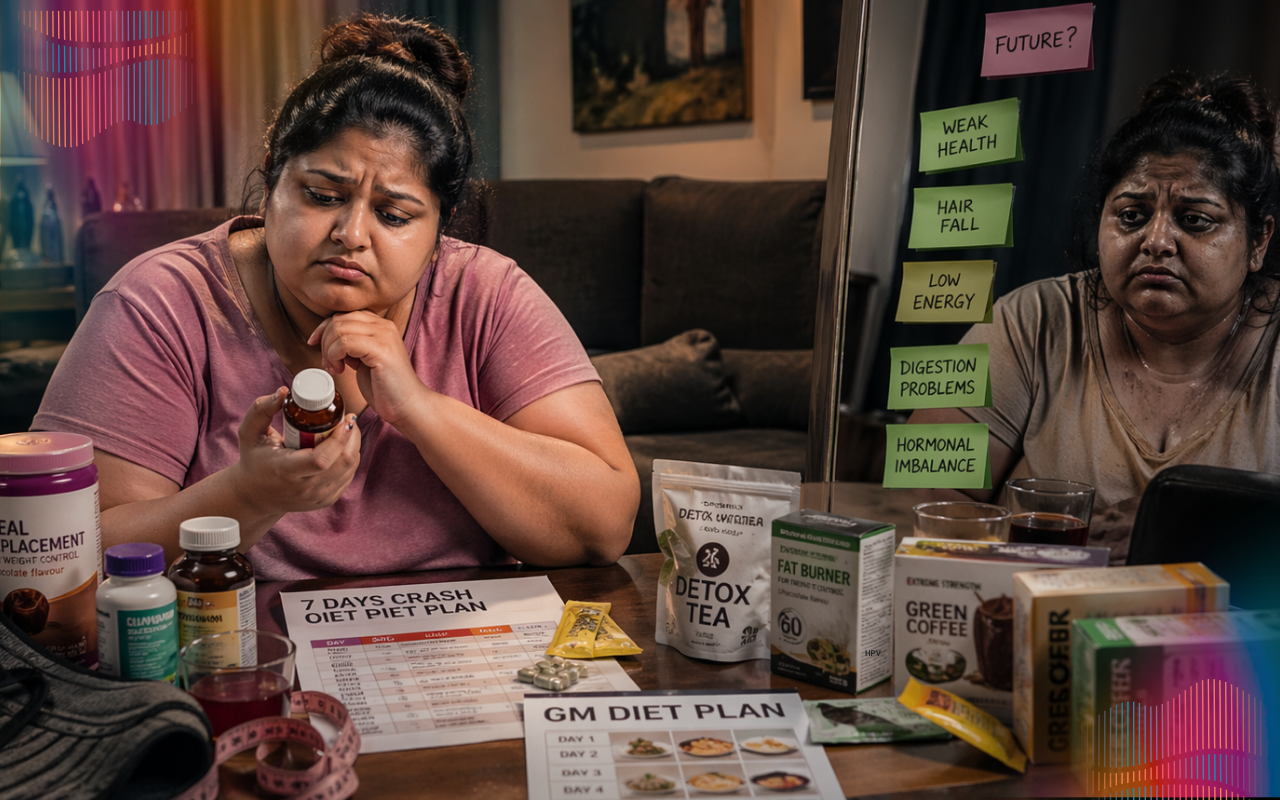
Let’s be honest: the temptation is everywhere. You’ve seen the "before and after" photos on social media, read the headlines about celebrities looking transformed, and maybe even heard your neighbor talk about their "miracle pen." In 2026, weight loss drugs like Wegovy, Ozempic, Zepbound, and the newly arriving Indian generics have moved from the fringes of medicine straight into our daily conversations.
But here’s the million-dollar question: Is it actually a "miracle," or are we just trading one set of health problems for another?
The "Magic" Behind the Curtain: How They Work
To understand the safety, you first have to understand the chemistry. These drugs—known as GLP-1 receptor agonists—aren’t just "fat burners." They are hormonal mimics. They copy a hormone your body naturally makes called Glucagon-like Peptide-1.
When you take these meds, you’re essentially "hacking" your brain and gut. It tells your brain you’re full (even when you’ve only had three bites) and slows your stomach down so food sits there longer. As IQVIA’s 2026 Obesity Report points out, 2026 is the "inflection point" where these drugs move from rapid adoption to long-term performance monitoring. But as with any hack, there’s always a risk of a system crash.
The Short-Term Struggle: Nausea, "Ozempic Face," and Hair Loss
Most people expect the nausea. It’s the most common "welcome gift" from these medications. According to MedCentral’s 2026 clinical data, common side effects like nausea and vomiting affect roughly 30% to 44% of users, often leading to people quitting the treatment prematurely.
But there are two other short-term side effects that catch people off guard:
The "Ozempic Face" Phenomenon: When you lose weight at warp speed, your skin can't always keep up. The fat that gives your face a youthful "bounce" disappears, leaving some people looking older or more hollowed out.
The Hair Loss Mystery: This is a big one. It’s called telogen effluvium. Basically, when your body goes through a massive shock—like losing 10% of your body weight in a few months—it panics. It decides that growing hair is "non-essential" compared to keeping your heart and lungs going. The result? Significant thinning. The good news? It’s usually temporary. The bad news? It’s a stressful price to pay for a smaller waistline.
The Deep Dive: What Happens to Your Glands?
This is where the conversation gets serious. We aren’t just talking about fitting into old jeans anymore; we’re talking about your internal organs.
The Pancreas and Gallbladder
Your pancreas is the "factory" for insulin. Because these drugs force the factory to work differently, they can sometimes cause it to "overheat." Clinical findings summarized by MedCentral warn that while rare, acute pancreatitis (inflammation of the pancreas) remains a documented risk that requires immediate medical attention. Similarly, when fat melts away too fast, your bile can get "sludge-y," leading to painful gallstones.
The Thyroid Warning
If you’ve ever looked at the box for these drugs, you’ll see a "Black Box Warning"—the most serious kind the FDA gives. In lab studies, these drugs were linked to thyroid C-cell tumors. While we haven't seen a massive wave of this in humans yet, the Mayo Clinic (2026) emphasizes that these drugs are still under strict surveillance for long-term glandular impacts. If you have a family history of thyroid issues, this "quick fix" might be a complete no-go.
The 2026 Reality: The Rise of Generics and Counterfeits
If you’re reading this in India, the landscape just changed. In March 2026, the foundational patent for semaglutide expired here. According to Asia IP Analysis, this has opened the floodgates for local pharmaceutical giants like Sun Pharma and Dr. Reddy’s to bring out affordable versions.
Accessibility is great, but it comes with a catch. As reported by Lancet, there is a "significant and growing threat" of counterfeit obesity drugs. Desperate buyers are finding "knock-offs" online that contain nothing but salt water—or worse, harmful substances—leading to life-threatening complications.
Stomach Paralysis: The Risk Nobody Wants to Talk About
One of the scariest long-term impacts surfacing in 2026 is Gastroparesis, or stomach paralysis. Remember how we said these drugs slow down your stomach? Well, for some people, the stomach just... stops.
A 2026 research overview on MedCentral highlights that real-world studies are finally quantifying these rare events. Even after they stop the injections, some users suffer from chronic bloating and vomiting because their stomach muscles won't restart.
The "Sarcopenia" Trap: Losing Muscle, Not Just Fat
Here is a fact that might shock you: when you lose 20kg on these drugs, a significant portion of that—up to 40% in some cases—might be pure muscle.
Doctors call this "Sarcopenic Obesity." You look thinner, but you’re actually weaker and your metabolism is slower than when you started. As The Associated Press (2026) notes, these drugs are most effective when combined with "healthy habits" like resistance training. If you aren't lifting weights, you're essentially "melting" your muscles away.
Tool vs. Crutch
So, is it worth it?
If you are dealing with chronic obesity or heart disease, the benefits of these drugs often far outweigh the risks. They are life-saving tools. But for those looking for a "vacation body" or a shortcut, the risks—glandular stress, hair loss, and potential stomach paralysis—are a very high price to pay.
The Bottom Line: Before you join the "Quick Fix" club, do three things:
- Check your family history (especially thyroid and pancreas).
- Get a doctor you trust, not just an online store.
- Focus on protein and weights.
The goal isn't just to be "thin" in 2026; it’s to be healthy in 2036.


 admin@zyephr.com


