




What would you rather pay for today- a morning walk and an annual health check-up, or a hospital bill running into lakhs?
For millions of people in India, this isn’t a hypothetical question. It’s a financial reality.
According to data from the World Health Organization Global Health Expenditure Database, around 44% of healthcare spending in India comes directly from people’s pockets. That means nearly half of all medical expenses are paid by individuals without insurance or government support.
In simpler terms: getting sick in India often means paying for it yourself.
That’s why preventive healthcare isn’t just about staying fit, it’s about protecting your finances.
What “Out-of-Pocket Healthcare” Really Means
Out-of-pocket healthcare refers to medical expenses that households pay directly, without reimbursement from insurance or public healthcare systems.
These costs include:
- Doctor consultations
- Diagnostic tests
- Medicines
- Emergency treatment
- Hospitalisation
Even a single hospital stay can cost ₹1–5 lakh in private hospitals, depending on the condition and treatment required.
For many families, that can mean dipping into savings, taking loans, or delaying treatment.
And this is where prevention becomes powerful.
The Rising Burden of Lifestyle Diseases
India is witnessing a sharp rise in lifestyle-related illnesses such as:
- Type 2 Diabetes
- Hypertension
- Heart Disease
- Obesity
These conditions often develop slowly over time, influenced by sedentary lifestyles, unhealthy diets, stress, and poor sleep.
The encouraging part is that many of these diseases are preventable, or at least manageable, if detected early.
Which means small lifestyle choices today can prevent major health and financial problems tomorrow.
Prevention vs Treatment: The Cost Gap
When you compare the cost of preventive care with the cost of treatment, the difference is striking.
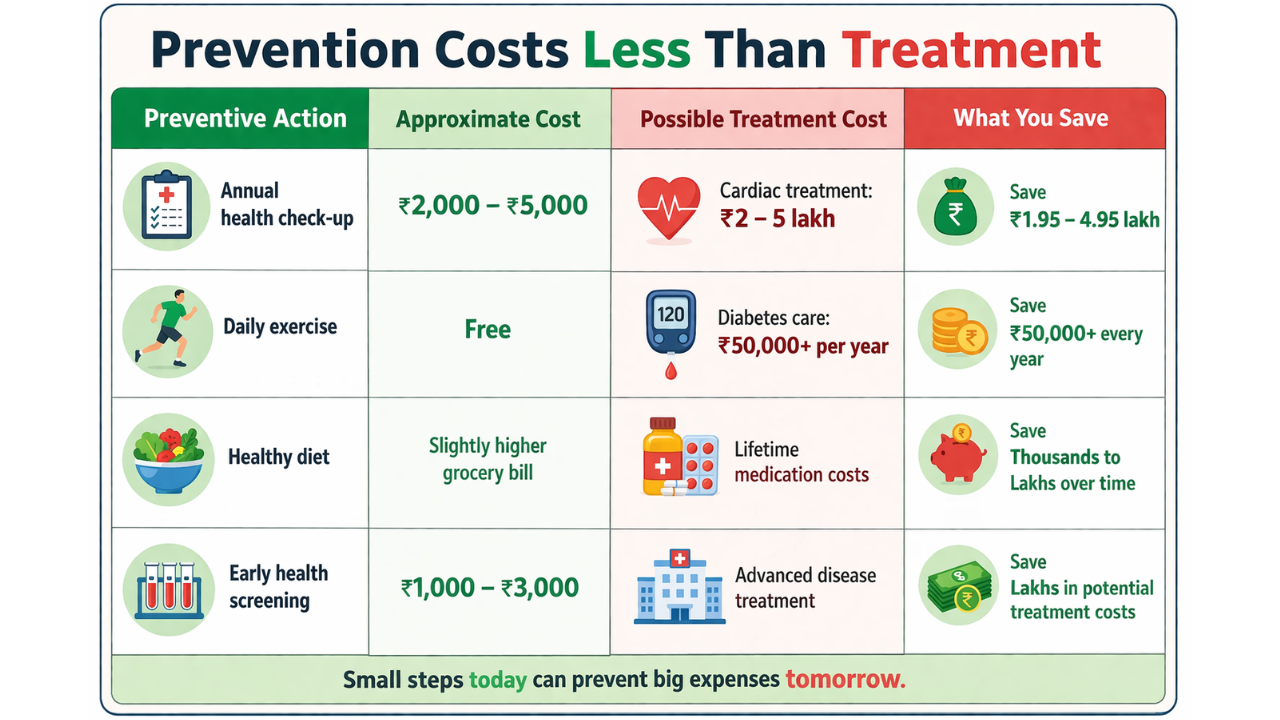
The takeaway is simple:
Prevention costs a little. Treatment can cost a lot.
Preventive Habits That Can Protect Your Health (and Wallet)
The good news is that preventive healthcare doesn’t require drastic changes. A few consistent habits can make a big difference.
1. Schedule Regular Health Check-ups
- Routine screenings help detect issues before they become serious.
- Basic tests to consider include:
- Blood sugar
- Cholesterol levels
- Blood pressure
- Liver and kidney function
2. Move Your Body Every Day
Just 30 minutes of physical activity daily can reduce the risk of several lifestyle diseases.
Walking, yoga, cycling, or light strength training are all effective options.
3. Eat for Long-Term Health
A balanced diet plays a crucial role in preventing chronic illness.
Focus on:
- Fruits and vegetables
- Fibre-rich foods
- Lean proteins
- Reducing ultra-processed foods
4. Manage Stress and Prioritise Sleep
Chronic stress and lack of sleep can increase the risk of metabolic disorders and heart problems.
Practices like meditation, breathing exercises, and maintaining a consistent sleep routine can help.
5. Keep Track of Your Health Metrics
Monitoring indicators like blood pressure, blood sugar, and cholesterol can help catch problems early.
Early detection often means simpler treatment and lower costs.
Prevention and Insurance: A Powerful Combination
While preventive habits reduce risk, they can’t eliminate it entirely.
That’s why experts recommend combining preventive healthcare with health insurance. Prevention helps you stay healthy, while insurance protects you from unexpected medical expenses.
Together, they offer both health security and financial protection.
In countries with strong public healthcare systems, falling sick may not always mean a heavy financial burden. But in India, where nearly half of healthcare spending is paid directly by individuals, the stakes are much higher.
Which brings us back to the question:
Pay now or pay later?
Investing a little time and effort in preventive health today may help you avoid far bigger medical and financial costs tomorrow.
Because when it comes to healthcare, the smartest investment is often prevention.
And the good news is that prevention doesn’t have to be complicated. Small, consistent steps — tracking your health, building better habits, and staying aware of your body’s signals — can make a big difference over time.
That’s exactly where tools like Zyephr can help. By making it easier to monitor your health and stay on top of preventive habits, it supports you in taking control of your well-being — one day at a time.
Download Zyephr and start managing your health, every day.



 admin@zyephr.com


