


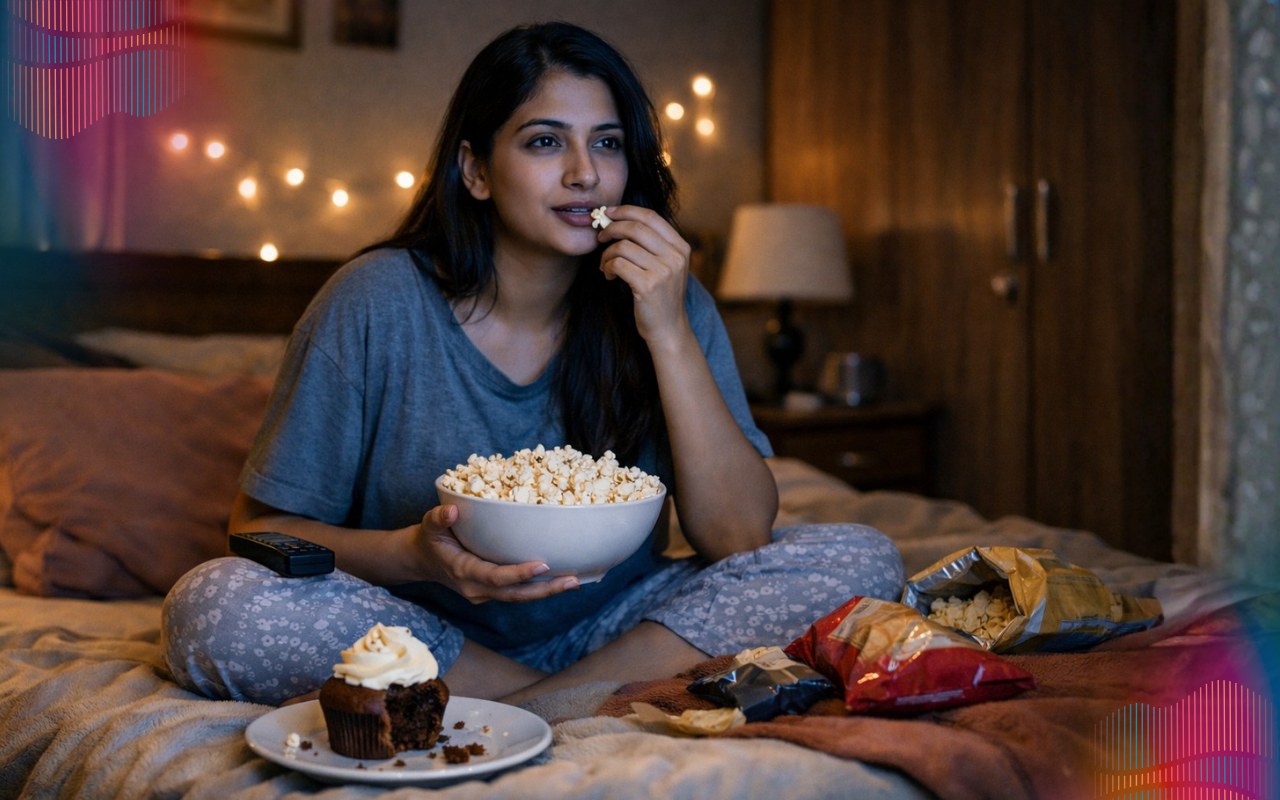

Late-night eating feels harmless. It’s just a snack, right?
But if you regularly eat after 10–11 PM, crave sugar at night, or feel hungry right before bed, it may be affecting more than your weight.
Late-night eating is increasingly being studied for its impact on metabolic health, sleep quality, and blood sugar control.
Why Late-Night Cravings Happen
Night cravings are not always about hunger.
They can be triggered by:
- Skipping meals during the day
- Eating too little protein or fibre
- Stress and emotional eating
- Poor sleep
- Long gaps between lunch and dinner
When you’re tired, your brain looks for quick energy. That’s why late-night cravings are often for sweets, chips, or instant foods.
How Late-Night Eating Affects Metabolism
Your body isn’t designed to digest heavy meals at midnight.
At night, digestion slows down and insulin sensitivity drops. That means your body handles sugar and carbs less efficiently.
Over time, frequent late-night eating may contribute to:
- Poor blood sugar control
- Increased fat storage
- Higher inflammation
- Acid reflux and bloating
- Lower sleep quality
Even if your calories are the same, eating late can change how your body processes food.
The Sleep Connection Most People Miss
Late-night meals can disturb deep sleep, especially if the food is heavy, spicy, or sugary.
And poor sleep increases hunger hormones the next day, which leads to more cravings and overeating.
So a loop forms:
Bad sleep → cravings → late-night eating → worse sleep.
This is one of the most common patterns behind stubborn weight gain and constant fatigue.
A Realistic Fix (No Strict Rules)
You don’t need a “no food after 6 PM” rule.
Instead, aim for:
- A proper dinner with protein + fibre
- A planned light snack if needed
- Less sugar at night
- A gap of at least 1–2 hours before sleeping
Even shifting your last heavy meal slightly earlier can improve digestion and sleep.
Late-night eating isn’t evil. But if it becomes a habit, it can quietly harm your metabolic health and sleep.
Fixing it isn’t about willpower. It’s about routine, balanced meals, and better sleep support.





 admin@zyephr.com


