


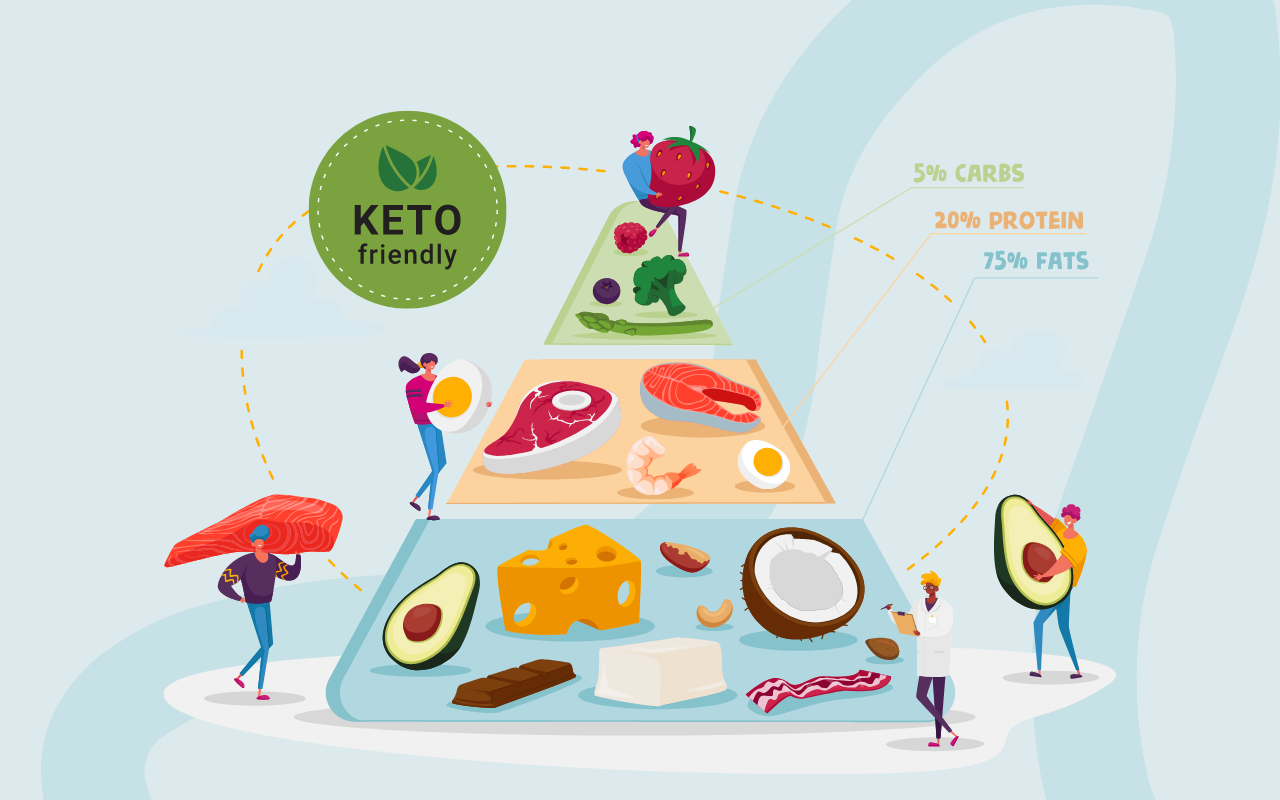

Over the past few years, the hype about ketogenic food has grown tremendously. The only reason for that must be that it allows you not to sweat in the gym. A simple dietary change and the miracle of weight loss sounds very lucrative. And it's all that garnered all the attention. Well, if that’s the case then it is high time to dig deeper to find the truth behind it. To know if it really does help with weight loss then let’s discuss the pros and cons.
So, this highly advertised weight loss wonder is actually a medical diet and comes with the risk associated with it.
How does the keto diet work?
When consuming a ketonic diet, the body forces the mechanism to shift to ketones as fuel for the body than relying on sugar. The liver produces ketones by burning fats. Burning fats to produce ketone seems good. But making the liver do so is a bit tricky. To make your body enter into the process of ketosis, you must not eat any carbohydrate which is less than 20 grams. Remember a banana contains 27 grams of carbs. It takes a few days for your body to reach the state of ketosis. Consuming too much protein can interfere with ketosis.
Why it can be risky?
Since the body will be shifting from glucose as the energy source to ketones, insulin levels will go down and your body will shed the excess water and sodium. Initially, you will feel a bit of weight loss but you need to be very careful because sodium and potassium play a vital role in acid-base balance, blood pressure, and body fluids. So, due to these changes, you may feel a bit of fatigue, light-headedness, headaches, and constipation. Another con associated with it is that it reduces the metabolism rate of your body. Also, you may experience your breath being pungent or sometimes metallic.
When is a ketogenic diet recommended?
Well, weight loss is the major benefit of the ketogenic diet. The insulin level is low during ketosis which burns more fats. It is beneficial to those who are struggling with sugar problems, cognitive impairments, and epilepsy. It is highly necessary that the ketogenic diet is calculated and must be taken under strict supervision. So, it is advisable to consult a doctor before taking in the diet. If someone is having a pre-medical condition then is advisable to consult a doctor as well.
The risk with the keto diet
1. Nutrient deficiency. If you are not consuming green leafy vegetables in sufficient amounts then you may be at the risk of running out of desired nutrients, and vitamins.
2. Liver problems With so much of fats to metabolize the liver functioning may deteriorate if there is any pre-condition of the liver.
3. Kidney problems. Kidney help metabolize protein, and the keto diet may overload them.
4. Constipation. The keto diet is low on fiber hence it may result in constipation.
5. Fuzzy thinking and mood swings. The brain needs fresh glucose from carbohydrates to function. Low sugar may cause irritability,
Recommendation
The Keto diet is a bit tricky. It must be taken under medical supervision. Any deficit in any of the micronutrients may result adversely. This means you need to take vitamin supplements to cover the nutrient loss. If you are working out while you are on your keto diet then do chart the type of food that you are eating. Complex carbohydrates like whole grain, rice, and oatmeal do not increase the blood sugar level, and in turn, keep you full all day long and provide essential nutrients. In each meal try to include a wide variety of food.





 admin@zyephr.com


