


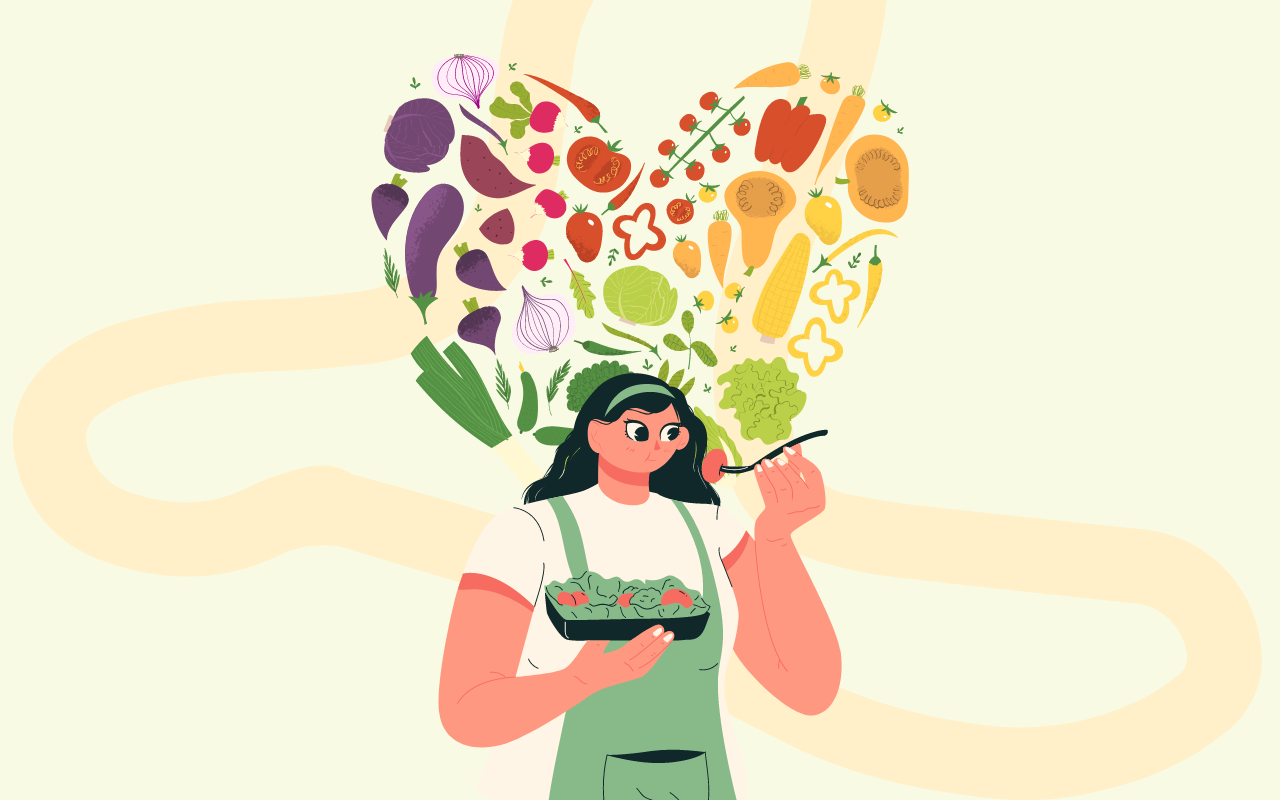

Has your doctor also asked you to “eat the rainbow”? And do you know why health professionals often end up asking you for this kind of diet?
Well, the answer is as simple as it seems. To emphasise on the importance of eating different varieties of fruits and vegetables. We all know that we should eat colourful fruits and vegetables, but do you know the benefits that it can have on your body? Read on and you will find many!
Benefits of the ‘Rainbow Diet’
Eating fruits and vegetables with different colours regularly is the secret of following the rainbow diet. But where does the colour come from? Plants contain different pigments (phytonutrients) which give them their colour. These different coloured plants are then linked to specific levels of nutrients. The health benefits of a diet rich in fruits and vegetables is greatest on the brain and the heart. These colours in the diet could also be an indication of various nutrients, thereby reducing the risk of missing out on any vital minerals or nutrients. Studies show that a regular rainbow diet has many benefits and no virtual downsides. It helps the body get an array of vitamins, minerals and phytochemicals- especially good for the overall health of the body. Most of the colourful fruits and vegetables also have anti-inflammatory and antioxidant effects.
Colours and Nutrients
Colours and nutrients are closely related and belong to a close-knit circle. Each colour represents a pigment (phytochemical) and set of nutrients. The different colours that are very prominently found and can be easily added to the diet include:
- Red:
The fruits and vegetables that have this colour include tomatoes, watermelon, pink guava, grapefruit, strawberries, cherries, etc. The colour comes from a phytonutrient ‘lycopene’. This nutrient belongs to the vitamin A family. These fruits and vegetables provide minerals like folate and potassium and are good source of vitamin A, vitamin C, and vitamin K1. They are good antioxidants, and have anti-inflammatory properties. They benefit the heart, may reduce skin damages from the sun, and also lower the risk of some cancers.
- Orange and Yellow
Carrots, sweet potatoes, yellow peppers, corn, bananas, pineapples, tangerines, etc. are fruits and vegetables with orange and yellow colours. They contain carotenoids- belonging to the vitamin A family. These fruits and vegetables are a good source of fibre, folate, potassium, vitamin A (beta carotene) and vitamin C. Along with being good antioxidants, this colour favours eye health and reduces the risk of cancer.
- Green
The green vegetables are always favoured over the rest. Fruits and vegetables in green include spinach, broccoli, avocados, asparagus, cabbage, sprouts, and herbs. The green colour of the leaf comes from chlorophyll and carotenoids while greens like broccoli and cabbage have indoles, isothiocyanates, etc. The green fruits and vegetables are a good source of fibre, folates, magnesium, potassium and vitamin K1. These are also anti-inflammatory and are good antioxidants.
Other colours like blue and purple are good sources of vitamin B6, manganese, and other nutrients. These can be consumed through blueberries, blackberries, grapes, etc. Fruits and vegetables of this colour can be helpful in treating neurological disorders.
Bringing the Rainbow into the Diet
To solve a problem, it is important to begin with the solution. The most important part of the rainbow-diet lifestyle is adding the colours into your regular plate.For this, one can begin by adding vegetables like spinach, mushrooms, or colourful bell peppers into your omelette, or sandwich. Getting some colourful smoothies is also a way to add the rainbow into your platter.
Some examples to add the rainbow colours into your plate are-
- Yogurt or cereal with berries, kiwis, strawberries, etc.
- Dried mango slices.
- Salads and dip.
- Roasted sweet potatoes with sprouts.
- Spaghetti with colourful fruits like tomatoes, mushrooms, broccoli and zucchini.
With such diverse options available, one can easily bring the rainbow into the regular diet. However, this might be difficult for people living in areas that have no fresh produce year-round. In such a case one can opt for frozen fruits and vegetables which are equally nutritious, and affordable.



 admin@zyephr.com


